Dorset Museum & Art Gallery's Thomas Hardy Collection Receives Prestigious Arts Council Designation
Dorset Museum & Art Gallery is delighted to announce that its Thomas Hardy Collection has been awarded Arts Council England (ACE) Designation status. This prestigious recognition acknowledges the collection's outstanding significance and its vital importance to national cultural heritage.
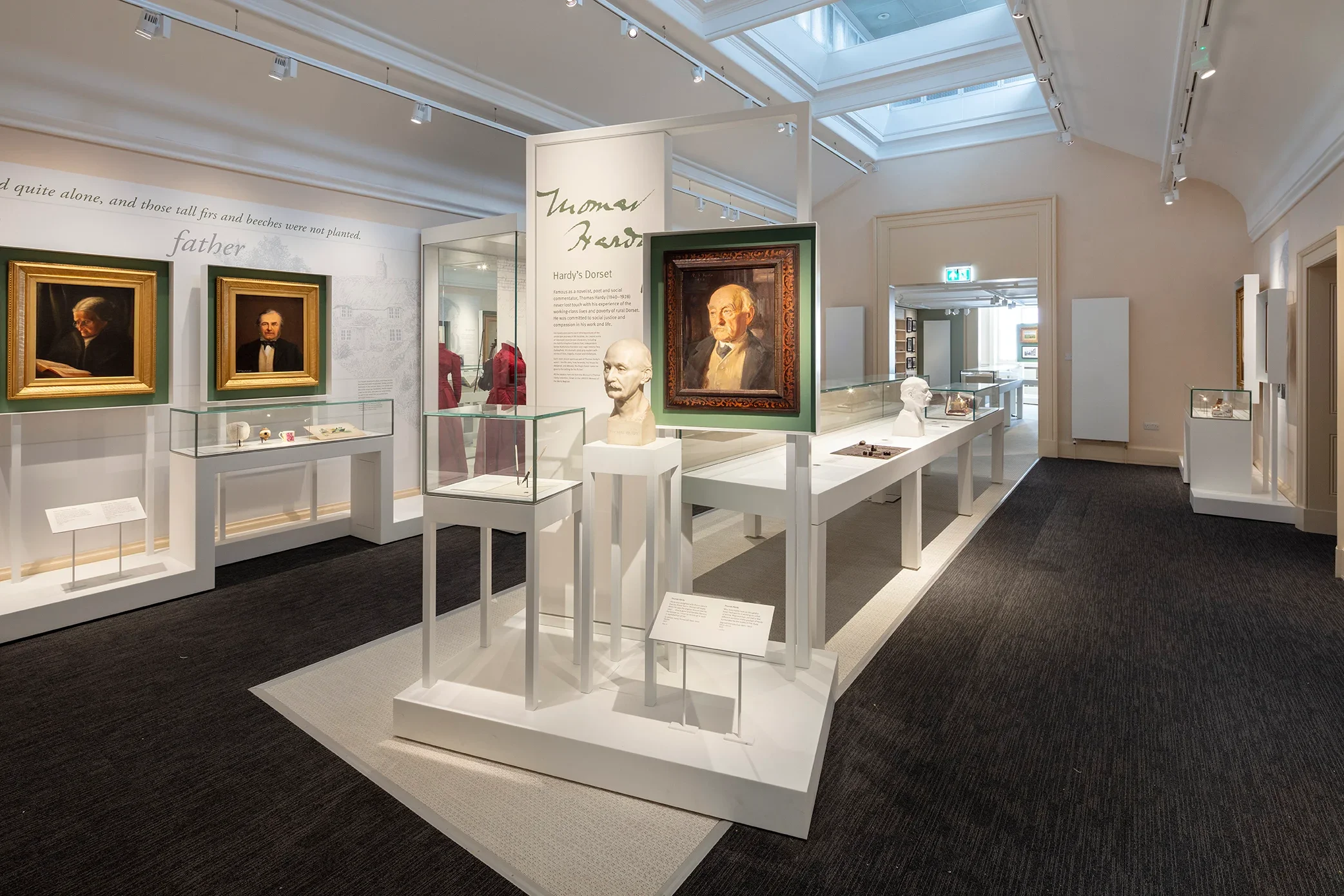
Dorset Museum & Art Gallery owns the world's largest and most important archive of Thomas Hardy material – over half of all surviving Hardy material, including two thirds of his known original manuscripts.
The collection comprises approximately 8,000 items spanning manuscripts, correspondence, photographs, and personal belongings. The predominant component was transferred from Max Gate as a bequest from his second wife, Florence, in 1937. Other material had been donated previously: at least one item was donated by Hardy himself, and a large number of items came to the museum in 1941 via a bequest from Hardy's sister Katherine.
The archive is deposited with Dorset History Centre, whilst the collection is displayed in the museum galleries.
"Thomas Hardy played an early role in securing the future of Dorset Museum & Art Gallery, and this award will ensure the long-term care and preservation of his exceptional collection," said Jenny Cripps, Senior Curator at Dorset Museum & Art Gallery. "The Arts Council England Designation will help us share the collection's stories with even broader communities, benefiting Dorset's heritage sector and the wider Hardy Country region. It's particularly fitting that Hardy's superb resource has received this recognition here in Dorchester – his beloved inspiration for Casterbridge, at the heart of his Wessex."
A Collection of National and International Significance
Thomas Hardy (1840–1928) was among the most accomplished late-19th and early-20th-century writers. His 14 novels – including Far From the Madding Crowd, The Mayor of Casterbridge, Tess of the D'Urbervilles and Jude the Obscure – alongside 54 short stories, 974 poems, and numerous plays, have profoundly shaped English literature and continue to command a worldwide readership.
Hardy's writing tackled themes of enduring human significance: love and loss, justice and injustice, faith and doubt. His work exposed the hardships faced by ordinary people – education barriers, labour exploitation, poverty – offering stark critiques of social convention. Though controversial in his lifetime (his novels faced censorship and public scandal), Hardy's integrity and unflinching portrayal of human experience have secured his place among the world's great chroniclers of the human condition.
The collection directly evidences Hardy's literary genius and the breadth of his influence. It includes:
Original handwritten manuscripts of his novels, including Under the Greenwood Tree (1872), The Mayor of Casterbridge (1886) and The Woodlanders (1887)
Two volumes of his poetry collections: Satires of Circumstance (1914) and Late Lyrics and Earlier (1922)
Over 4,000 unpublished letters and cards received by Hardy, revealing his impact on contemporary literary culture and his relationships with figures including H.G. Wells, Rudyard Kipling, Virginia Woolf, Ezra Pound and William Barnes
Letters from correspondents spanning more than 30 countries
Ten of his twelve surviving notebooks, offering direct access to his ideas and creative processes
Photographs, personal effects, his extensive library with handwritten annotations, and the contents of his final study at Max Gate – transferred and faithfully recreated
Darren Henley, Chief Executive at Arts Council England said: “The Thomas Hardy Memorial Collection celebrates one of the region’s most famous and influential sons with a level of detail and dedication that is remarkable. I am delighted that the hard work of everyone on the team has been recognised with a prestigious award of Designation for their collection.”
Unlocking Research and Understanding
In 2012, the collection's significance was already recognised through its inscription on the UNESCO Memory of the World Programme for British documentary heritage – placing it on a par with the Domesday Book, the Magna Carta and Shakespeare's archives.
The Designation award builds on recent major initiatives to make the collection accessible to researchers and the public. In partnership with the University of Exeter, the museum and DHC completed Hardy's Global Correspondences – an innovative digital edition of the letters to Hardy, now freely available online. This groundbreaking project brought together traditional scholarship with cutting-edge digital tools, engaging international audiences and making previously inaccessible material available to scholars and Hardy enthusiasts worldwide.
A newly completed online catalogue of the Thomas Hardy Collection by DHC with support from the Thomas Hardy Society – created through successful fundraising of £70,000 – is about to be made freely available in its entirety. This step-change in intellectual access is anticipated to significantly increase engagement from researchers, students and the public worldwide.
The collection is actively used by leading Hardy scholars from universities including Toronto, Reading and Ottawa. Recent academic projects have included critical editions of Hardy's novels, PhD research on Hardy's Wessex, and studies of his working relationships with illustrators and contemporaries.
Supporting Conservation and Access
ACE Designation status opens important funding pathways to support the collection's long-term care and conservation. The museum intends to explore funding opportunities to improve the display and interpretation of its nationally significant Thomas Hardy material.
Dorset Museum & Art Gallery and Dorset History Centre are committed to providing access to researchers and the public. The museum accommodates researchers in its Collections Discovery Centre and offers an enquiry service for those unable to visit. High-resolution digital copies minimise handling of fragile original materials. Both institutions actively facilitate research requests and encourage the dissemination of findings.
Hardy's Enduring Connection to Dorset
Hardy's writing is inextricably grounded in place. Born and raised in rural Dorset, his life experiences – its landscapes, traditions, dialect and characters – directly inspired his fictional creation of Wessex. The collection documents his life from childhood through to his death and remains intimately connected to Dorset.
Dorset Museum & Art Gallery itself is part of Hardy’s heritage. The building was designed by G.R. Crickmay & Sons, the architectural firm for which Hardy trained as a young man. Hardy mentions the museum's construction in Jude the Obscure and maintained a lifelong connection to the institution, presenting papers and supporting its work.
In 1910, Hardy was presented with the Freedom of the Borough of Dorchester – now on display in the museum. A bronze statue of him, erected in 1932, stands in the town. Following Hardy's wishes, his collection remains in his hometown, making Dorchester – Hardy's inspiration for his fictional Casterbridge – a destination for international visitors and researchers wishing to follow in the footsteps of Dorset's most famous literary son.
Looking Forward
The Designation award comes at an opportune moment as the museum and partners prepare to commemorate the centenary of Hardy's death in 2028. The museum is establishing partnerships with major institutions including Yale University (which holds a manuscript draft of Far from the Madding Crowd), University College Dublin, the British Library, the University of Texas and New York Public Library to bring Hardy's scattered archival material into conversation during the centenary celebrations.
"This recognition will help us tell Dorset's stories in bold ways that stimulate deep personal engagement with our world-class collections," said Claire Dixon, Executive Director at Dorset Museum & Art Gallery. "The Thomas Hardy Collection stands at the heart of our mission to connect audiences with 250 million years of Dorset's heritage. We look forward to welcoming researchers, students and readers from around the world to discover the life and work of one of literature's greatest voices."
Photo: © Dorset Museum & Art Gallery

